What Is Knee Arthroscopy?
Arthroscopy comes from Greek words meaning "to look within the joint." The surgeon makes two or three small incisions, usually less than half an inch each, and inserts an arthroscope, a pencil-thin camera that shows the inside of the knee on a screen. Small instruments go in through the other incisions.
Common procedures done this way include:
- Meniscus repair, which stitches a torn meniscus (the C-shaped cartilage cushion in the knee) so it can heal.
- Partial meniscectomy, which trims away a torn piece of meniscus that cannot be repaired and is causing catching or locking.
- Removal of loose bodies, meaning fragments of cartilage or bone floating in the joint.
- Cartilage procedures and ligament reconstruction, such as ACL reconstruction.
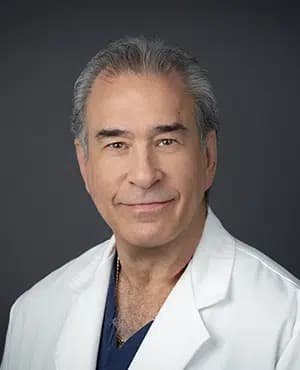
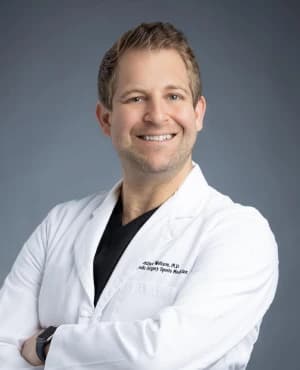
Dr. Wolfson's work also includes cartilage restoration and treatment of patellar (kneecap) instability. Dr. Chalal has practiced sports medicine in Palm Beach since 1988.
Performed as an outpatient procedure at a hospital or surgery center where our surgeons operate, with evaluation, imaging and physical therapy here in our Boynton Beach office.
Who Is a Candidate?
You may be a candidate if you have a knee injury with symptoms such as locking, catching, giving way or pain along the joint line, and your exam and MRI show a problem that surgery can address. Many meniscus tears, especially wear-related tears in people with arthritis, improve with physical therapy, activity changes and injections, and our surgeons generally try those first.
Arthroscopy is generally not recommended to treat knee arthritis itself. Research shows it does not help most people with arthritis more than non-surgical care.
What to Expect
Your evaluation includes an exam and imaging in our office, often an X-ray and an MRI. If surgery is recommended, it is done as an outpatient procedure, so most people go home the same day. The operation usually takes under an hour for a trimming procedure and longer for a repair or reconstruction. Anesthesia is typically general or regional, and your surgeon will discuss which applies to you.
You will leave with a bandage and instructions on icing, elevation and how much weight you can put on the leg. Physical therapy in our office usually starts within the first week or two.
Risks and Side Effects
Knee arthroscopy has a low rate of complications, but risks include infection, blood clots, bleeding into the joint, stiffness, nerve irritation around the incisions and anesthesia risks. A meniscus repair may not heal in every case and occasionally needs a second procedure.
Recovery
Recovery depends on what was done. After trimming a meniscus, many people walk with little or no support within a few days and return to most activities in four to six weeks. After a meniscus repair, you may need crutches or a brace and limited bending for about four to six weeks, with a return to sports often around four to six months. Timelines vary.
Because our physical therapists share your chart with your surgeon, your rehab can be adjusted as you progress.
Physical therapy happens in our office, with therapists who share your chart. Learn about on-site physical therapy.
Insurance and Cost
Knee arthroscopy is usually covered by Medicare and most commercial PPO plans when it is medically necessary, often with prior authorization. HMO and managed-care plans need a referral from your primary care physician before the visit. Co-pays, co-insurance and deductibles apply. For work injuries, we accept workers' compensation and handle documentation with your employer and carrier. Call our office and our staff will verify your benefits.
When to Talk to a Specialist
Schedule a visit if your knee locks, catches, gives way, stays swollen or hurts along the joint line after an injury. Go to the emergency room or call 911 if you cannot bear weight after an injury, the knee looks deformed, or after surgery you have fever, spreading redness or drainage. Call our office the same day about new calf pain or swelling after surgery; if you cannot reach us, go to the emergency room. Call 911 for sudden shortness of breath or chest pain.