
Body Area
Knee Pain & Injury Care in Boynton Beach
Your knee is a hinge joint where the thigh bone (femur) meets the shin bone (tibia), with the kneecap (patella) gliding in a groove at the front. The ends of these bones are covered with smooth articular cartilage so they slide easily. Between them sit two C-shaped pads called menisci, which cushion the joint and spread your weight evenly.
Four main ligaments hold the knee steady: the anterior and posterior cruciate ligaments (ACL and PCL) inside the joint, and the medial and lateral collateral ligaments (MCL and LCL) along the sides. The quadriceps and hamstring muscles, and the tendons that attach them, power the knee and protect it. Because the knee carries your body weight with every step, a problem in any one of these parts can change how the whole joint feels and moves.
Common Knee Symptoms
Knee pain can come on suddenly after a twist or fall, or build slowly over months. Where it hurts, when it hurts and what it feels like all help point toward the cause.
- Aching and stiffness that is worse in the morning or after sitting, often with swelling: common with knee osteoarthritis (wear of the joint cartilage).
- Catching, locking or pain along the joint line after a twist: often a meniscus tear.
- A pop at the time of injury, fast swelling and a feeling that the knee gives way: typical of an ACL tear.
- Pain around or below the kneecap with stairs, squatting or running: often tendonitis or kneecap tracking problems.
- Ongoing pain, stiffness or swelling months after a knee replacement: a painful knee replacement that needs a careful workup.
If you cannot put weight on the leg, the knee looks deformed after an injury, or the knee is hot, red and swollen with a fever, go to the emergency room or call 911.
How we diagnose knee pain
Your visit starts with a conversation about how the pain began and what makes it better or worse, followed by a hands-on exam of motion, stability and swelling. Because X-ray, MRI and diagnostic ultrasound are on site at Personalized Orthopedics of the Palm Beaches, most imaging can be done in the same building, often on the same day.
X-rays show bone alignment and arthritis. MRI shows soft tissues such as the meniscus, ligaments and cartilage. Ultrasound lets the physician look at tendons and fluid in real time and guide injections precisely.
Non-surgical care first
Most knee problems are treated without surgery at first, and our surgeons try non-operative care before recommending an operation. Depending on the cause, your plan may include:
- Activity changes, bracing and anti-inflammatory medication where appropriate.
- Physical therapy in our own office, with therapists who share your chart with your physician.
- Cortisone or hyaluronic acid injections, often guided by ultrasound. Hyaluronic acid is FDA-approved for knee osteoarthritis.
- PRP (platelet-rich plasma, prepared from your own blood). Evidence is still developing, results vary, and insurance usually does not cover it.
- iovera° cryoneurolysis, which uses cold applied through small needles to temporarily block knee arthritis pain, sometimes before a knee replacement.
Shockwave and MLS laser therapy are also offered. Coverage for these varies by plan, so ask our team before you start.
When surgery makes sense
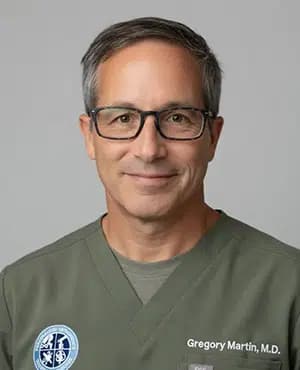
Surgery is considered when symptoms keep limiting your life despite a fair trial of non-surgical care, or when an injury such as a torn ACL in an active person is unlikely to do well without surgery. Options our surgeons perform include knee arthroscopy (small-incision surgery with a camera), ACL reconstruction, and partial or total knee replacement. Dr. Martin and Dr. Kerr also perform revision surgery for knee replacements that have failed or remain painful.
Our surgeons operate at hospitals and surgery centers across Palm Beach County, and physical therapy before and after surgery can be done in our office.
Your knee care team
Dr. Gregory Martin and Dr. Matthew Kerr focus on knee arthritis and knee replacement. Dr. Matthew Wolfson and Dr. Joseph Chalal treat sports injuries such as ACL and meniscus tears. Dr. Jeffrey Press treats arthritis, meniscus tears and fractures, and Dr. Alexandra Adelman provides non-operative sports medicine care with ultrasound-guided injections. Dr. Michael Baskin helps patients with pain after knee replacement, and William Ulrich, PA-C, performs iovera° treatments.
Knee Conditions We Treat
Condition
Knee Osteoarthritis
Knee osteoarthritis is the gradual wearing down of the smooth cartilage that cushions the ends of the bones in your knee, which causes pain, stiffness and swelling.
Learn More ConditionMeniscus Tear
A meniscus tear is a tear in one of the two C-shaped pads of cartilage that cushion and stabilize your knee between the thigh bone and shin bone.
Learn More ConditionACL Tear
An ACL tear is a tear of the anterior cruciate ligament, one of the main ligaments that keeps your shin bone from sliding forward and twisting under your thigh bone.
Learn More ConditionPainful Knee Replacement
A painful knee replacement is a knee that still hurts, feels stiff or feels unstable months after knee replacement surgery.
Learn More ConditionTendonitis
Tendonitis is pain and irritation of a tendon, the tough cord that connects muscle to bone, usually from repeated strain or overuse.
Learn More ConditionFractures
A fracture is a break in a bone, ranging from a thin crack to a bone broken into several pieces.
Learn More ConditionSports Injuries
Sports injuries are injuries to muscles, tendons, ligaments, cartilage or bones that happen during sports, exercise or active recreation.
Learn MoreKnee Treatments
Surgical
Total Knee Replacement
Total knee replacement is surgery that removes the worn, damaged surfaces of the knee joint and replaces them with metal and plastic parts called an implant.
Learn More SurgicalPartial Knee Replacement
Partial knee replacement replaces only the worn part of the knee and keeps the healthy parts, including the ligaments that stabilize the joint.
Learn More SurgicalRevision Joint Replacement
Revision joint replacement is surgery to fix or replace part or all of a hip or knee replacement that has worn out, loosened, become infected or is not working as it should.
Learn More SurgicalKnee Arthroscopy
Knee arthroscopy is a minimally invasive surgery in which the surgeon looks inside the knee with a small camera and uses slim instruments through a few small incisions to repair or trim damaged tissue.
Learn More SurgicalACL Reconstruction
ACL reconstruction is surgery that replaces a torn anterior cruciate ligament (ACL), one of the main ligaments that keeps the knee stable, with a graft made from tendon.
Learn More In-OfficeHyaluronic Acid Injections
Hyaluronic acid injections, sometimes called gel shots or viscosupplementation, place a gel-like substance into an arthritic joint to supplement the natural joint fluid.
Learn More In-OfficePRP Injections
Platelet-rich plasma (PRP) puts your body's own healing power to work.
Learn More In-Officeiovera° Cryoneurolysis
iovera° is a handheld device that applies extreme cold through small needles placed under the skin to temporarily block pain signals in targeted nerves around the knee.
Learn More In-OfficeShockwave Therapy
Extracorporeal shockwave therapy applies acoustic (sound) waves through the skin to a painful tendon to stimulate the body's healing response.
Learn More In-OfficeMLS Laser Therapy
MLS laser therapy uses a class IV therapeutic laser, called a Multiwave Locked System, to deliver light energy through the skin to painful tissue, with the goal of easing pain and inflammation without needles.
Learn MoreYour Knee Care Team
Reviews
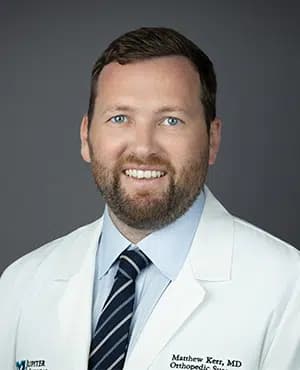
Matthew S. Kerr, MD
Hip & Knee Replacement & Revision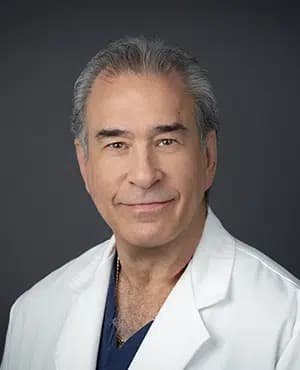
Jeffrey Press, MD
Sports Medicine & Joint Replacement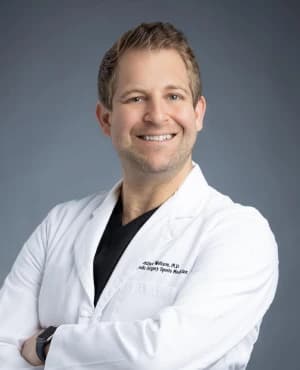
Matthew Wolfson, MD
Sports Medicine & Arthroscopy
Joseph B. Chalal, MD
Sports Medicine & Arthroscopy
Alexandra Adelman, MD
Non-Operative Sports Medicine & Regenerative Medicine
Michael Baskin, MD
Interventional Spine & Physiatry
William Ulrich, PA-C
Physician Assistant, Joint Replacement & IoveraKnee Pain: Frequently Asked Questions
Do I need an MRI for knee pain?
Not always. Many knee problems can be diagnosed with an exam and X-rays, and an MRI is ordered when the physician suspects a soft tissue injury such as a meniscus or ligament tear. If you do need one, MRI is available in our office.
Will I need surgery for a meniscus tear?
Many meniscus tears, especially wear-related tears in older adults, improve with physical therapy, activity changes and sometimes an injection. Surgery is considered when the knee locks or catches, or when symptoms continue despite non-surgical care. Your physician will explain which type of tear you have and what it usually needs.
Are knee injections covered by insurance?
Cortisone injections are commonly covered, and hyaluronic acid injections for knee osteoarthritis are often covered, depending on your plan. PRP and other biologic injections are usually not covered. Our staff can check your benefits when you call.
How long does recovery from knee replacement take?
Most people walk with support within a day or so and return to many daily activities over several weeks, but full recovery often takes several months and varies from person to person. Physical therapy is a key part of recovery and can be done in our office. After surgery, call our office the same day about new calf pain or swelling, and call 911 for sudden shortness of breath or chest pain.
Can I see a knee specialist without a referral?
With Original Medicare and most PPO plans you can usually call us directly. If you have an HMO or managed-care plan, including a Medicare Advantage HMO, a referral from your primary care physician must be in our office before your visit.
Location
6056 Boynton Beach Blvd, Suite 215
Boynton Beach, FL 33437
Visit Our Boynton Beach Office
Personalized Orthopedics of the Palm Beaches6056 Boynton Beach Blvd, Suite 215
Boynton Beach, FL 33437
Southwest corner of Boynton Beach Boulevard and El Clair Ranch Road, just east of Jog Road.
- Monday - Friday
- 7:30 AM - 5:00 PM*
- Saturday & Sunday
- Closed
- Phone
- (561) 733-5888
- Physical Therapy
- (561) 733-5888 ext. 6
*Individual physician hours vary. Outside office hours, call our main number to reach our answering service for urgent needs. Easy self-parking in front of and around the building, with easy access to Suite 215. Patients visit us from Boynton Beach, Delray Beach, Lake Worth, Wellington, Lantana and West Boynton and across Palm Beach County.
Ready to talk to a specialist?
Call our Boynton Beach office and a real person will help you find the right provider and the earliest opening.