Knee pain can be a frustrating and debilitating experience, regardless of whether you are active or not. It’s important to understand some of the common knee conditions that may be causing your discomfort, so you can seek appropriate treatment.
Here are some of the most common joint injuries and diseases that may be affecting you:
Osteoarthritis
Osteoarthritis is a degenerative joint disease that can affect any joint in the body, including the knee. It occurs when the cartilage tissue cushioning the ends of your bones wears down over time.
This can cause pain, stiffness, and swelling in the knee joint.
Patellofemoral Pain Syndrome
Patellofemoral pain syndrome (PFPS) is a condition that causes pain in the front of the knee, around the kneecap.
It is sometimes referred to as “runner’s knee,” because it is commonly seen in runners and other athletes. PFPS can be caused by:
- Overuse
- Muscle weakness
- Alignment issues
Meniscus Tear
The meniscus is a piece of cartilage that sits between the thighbone and shinbone in the knee joint.
A meniscus tear can occur from sudden twisting or rotation of the knee and from wear and tear over time. Symptoms include pain, swelling, and stiffness in the knee joint.
ACL Tear
ACL stands for anterior cruciate ligament, and it is one of the primary ligaments in the knee. An ACL tear is a common sports injury that can occur from:
- Sudden stops
- Changes in direction
- Direct impact to the knee
Symptoms include pain, swelling, and instability in the knee joint.
Bursitis
A bursa is a small sac filled with fluid that cushions the joint. Bursitis occurs when these sacs become inflamed, causing pain and swelling.
In the knee, bursitis can occur on the inside or outside of the joint and can be caused by overuse, injury, or infection.
Tendonitis
Tendonitis is the inflammation of the tendons, which are the bands of tissue that connect muscles to bones. In the knee, tendonitis can occur in the:
- Patellar tendon (which connects the kneecap to the shinbone)
- Hamstring tendons (which connect the thigh muscles to the shinbone)
Tendonitis symptoms include pain and tenderness in the affected area.
If you are experiencing knee pain or discomfort, it’s important to see a doctor to determine the underlying cause.
With the right diagnosis and treatment, many knee conditions can be successfully managed or even resolved.
Treatment Options for Knee Conditions
The treatment for a knee condition will depend on the underlying cause and severity of the condition.
Here are some common options for the aforementioned injuries and diseases:
Rest, Ice, and Compression
Mild cases of knee pain may be resolved with:
- Resting the affected joint
- Applying ice over the injury to reduce swelling
- Wrapping a compression bandage around the knee
Physical Therapy
Physical therapy can help improve strength and flexibility in the knee joint, which can reduce pain and prevent future injuries.
Pain Medications
Over-the-counter pain relievers such as acetaminophen or nonsteroidal anti-inflammatory drugs (NSAIDs) can help relieve pain and inflammation in the knee.
In some cases, prescription medications may be necessary.
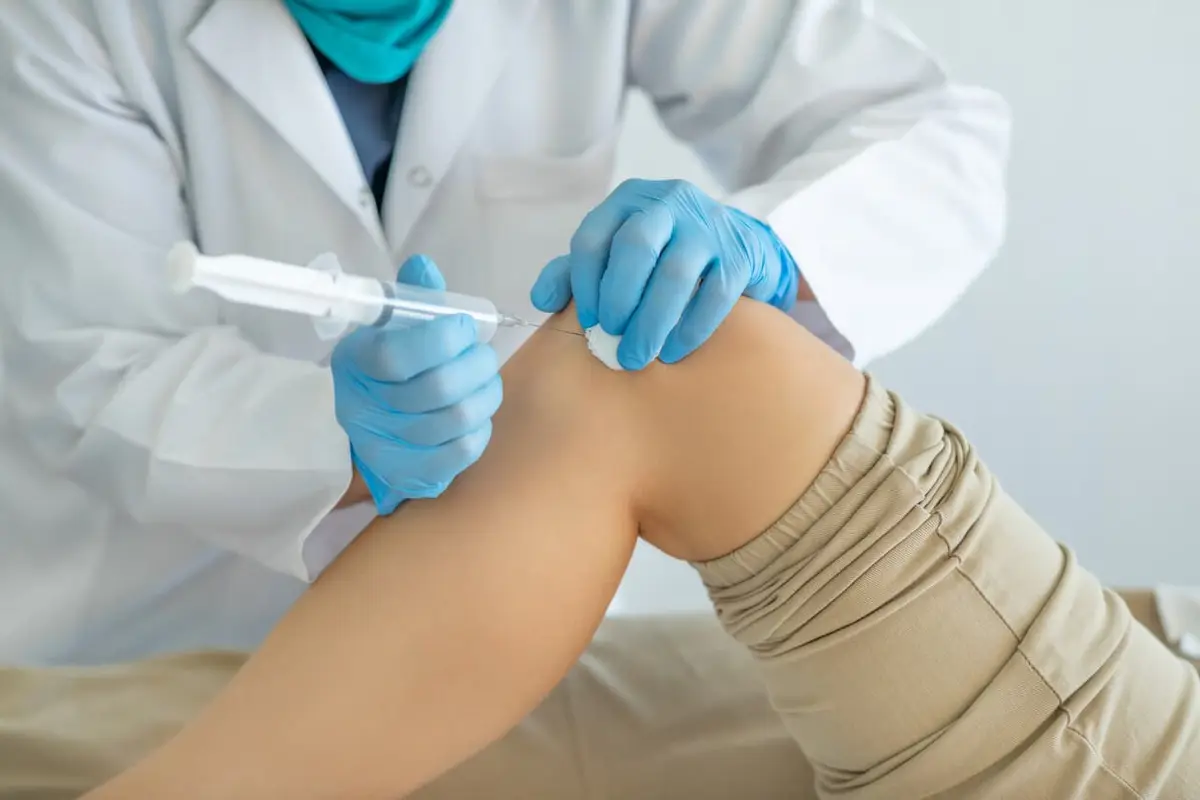
Injections
Corticosteroid injections can help reduce inflammation and pain in the knee joint. Hyaluronic acid injections can also be used to lubricate the joint and improve mobility.
Surgery
In some cases, knee surgery may be necessary to repair or replace severely damaged cartilage, ligaments, or tendons in the joint.
Surgery is often reserved for severe cases. Your knee doctor will likely recommend more conservative treatments first, unless the damage is prominent, or the pain is debilitating.
Lifestyle Changes
Making lifestyle changes such as losing weight or reducing high-impact activities can help reduce stress on the knee joint and prevent further damage.
It’s important to work with a doctor to determine the most appropriate treatment plan for your specific knee condition.
When to Visit a Knee Doctor
If you are experiencing persistent knee pain or discomfort, it’s important to visit a doctor to determine the underlying cause. Here are some signs that it’s time to visit a knee doctor:
- Pain that persists for more than a few days
- Swelling or stiffness in the knee joint
- Difficulty bending or straightening the knee
- Instability or weakness in the knee joint
- Popping or clicking sounds when moving the knee
- Inability to put weight on the affected leg
A knee doctor can perform a physical exam, order imaging tests, if necessary, and recommend an appropriate treatment plan to help alleviate your symptoms.
Don’t ignore persistent knee pain or discomfort, seek medical attention to get the relief you need.
Knee Pain Relief in Boynton Beach, FL
Most cases of knee pain can resolve with rest and conservative treatments. However, it’s always wise to err on the side of caution. Don’t hesitate to visit a knee doctor if you sustain an injury or experience symptoms that should not be ignored.
If you need knee pain relief in Boynton Beach, FL, look no further than Personalized Orthopedics of the Palm Beaches. Our team of orthopedic specialists will make sure you get the care you deserve. Call our office today so we can help you. You can also submit our secure online request form to request a visit with one of our knee doctors.
We look forward to serving you!
This article is for general education and is not medical advice. For advice about your condition, talk with your physician. Request an appointment with our team.