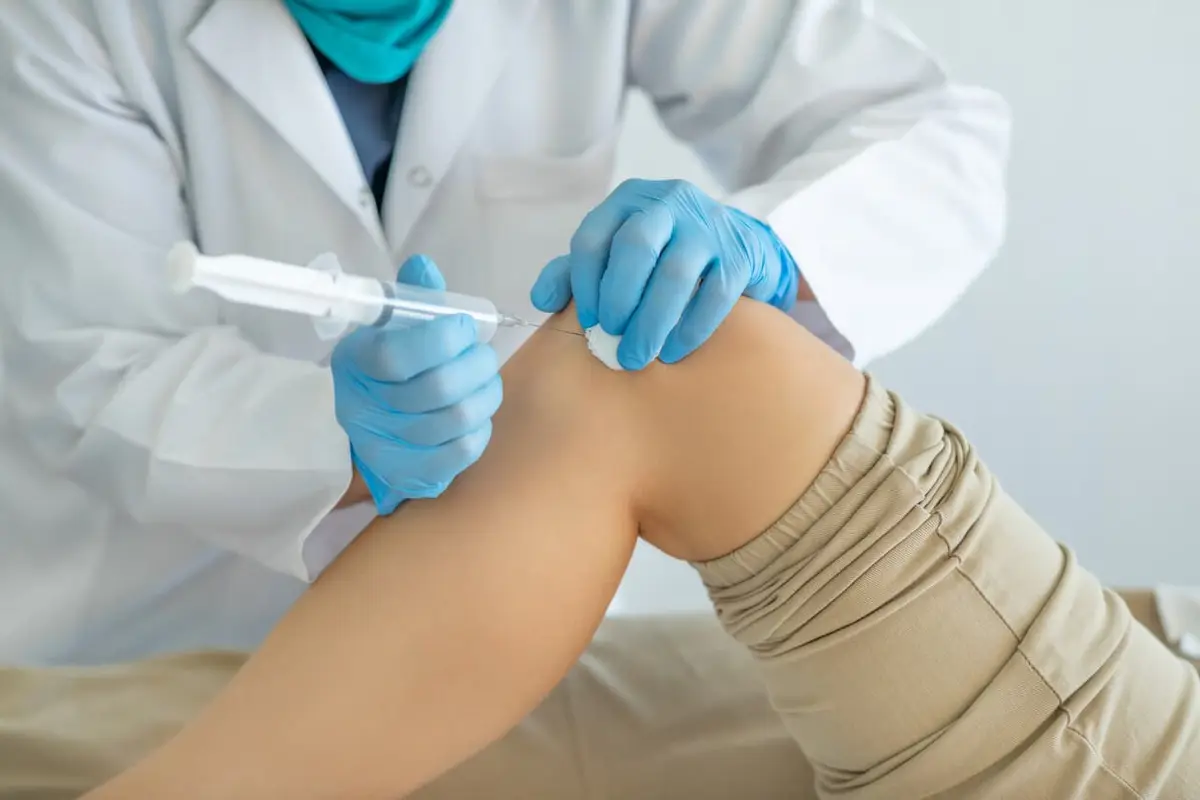
Knee pain significantly impacts the quality of life of many individuals and can affect anyone regardless of age. It can limit one’s ability to perform daily activities, participate in sports, and enjoy life in general. Given how common knee pain is, there’s been a significant amount of research that has gone into knee pain. It’s a good idea for anyone at risk for knee pain to understand how doctors analyze a person’s knee problems and arrive at a diagnosis and painful knee treatment options.
The Anatomy of the Knee
The knee, a complex joint, plays a pivotal role in movement. It is made of bones (the femur, tibia, and patella), ligaments (like the ACL and MCL), tendons (such as the patellar tendon), cartilage (including the menisci), and muscles. These components work in harmony to provide stability and flexibility, essential for walking, running, jumping, and squatting.
Common Causes of Knee Pain
Knee pain can stem from various sources, ranging from acute injuries to chronic diseases. The most likely causes include:
- Osteoarthritis: This age-related condition results from wear and tear of the knee cartilage.
- Rheumatoid arthritis: An autoimmune disorder that causes joint inflammation and pain.
- Tendonitis: Inflammation of the tendons, often due to overuse.
- Bursitis: Inflammation of the bursae, small fluid-filled sacs that cushion the knee joint.
- Meniscal tears: Damage to the knee’s cartilage, typically caused by twisting or trauma.
- Ligament injuries: Tears in ligaments such as the ACL, MCL, or PCL, common in athletes.
- Fractures: Breakages in the bones constituting the knee, often due to falls or accidents.
- Overuse injuries: Resulting from repetitive motion or excessive strain.
- Obesity: Excess body weight puts additional pressure on the knees, exacerbating pain.
The Diagnostic Process
When you visit a doctor for knee pain, they follow a systematic approach to diagnose the issue:
Initial Assessment
The doctor will begin by understanding your medical history, including any prior injuries or conditions. They’ll ask about the nature of your pain, its onset, and any activities that aggravate or relieve it.
Physical Examination
The doctor will examine your knee, checking for swelling, tenderness, range of motion, stability, and pain points. They might also assess your gait and the alignment of your legs.
Imaging Tests
Depending on the initial assessment, your doctor may recommend imaging tests like:
- X-rays, which detect bone fractures and degenerative joint disease.
- MRI, which provides a detailed image of soft tissues, including ligaments and cartilage.
- CT Scans, which offer a more detailed view of the bone and soft tissues.
- Laboratory tests such as blood tests can help diagnose conditions like rheumatoid arthritis or infections causing knee pain.
- Specialized Tests, such as arthroscopy, where a small camera is inserted into the knee joint for a closer look, might be necessary.
Painful Knee Treatment Options Overview
The treatment for knee pain varies based on the diagnosis and can range from conservative to surgical interventions.
Non-Surgical Treatments and Pain Management
Pain management for knee pain involves a combination of techniques tailored to individual needs.
A fundamental approach is the RICE method: Rest, Ice, Compression, and Elevation. Resting the knee reduces further strain and allows healing, while ice application, especially during the first 48 hours after an injury, can reduce swelling and numb pain. Compression, using elastic bandages or knee braces, provides support and limits swelling. Elevation of the leg above the heart level also helps reduce swelling.
Over-the-counter pain relievers like ibuprofen and acetaminophen are effective for mild to moderate knee pain. These medications not only alleviate pain but also reduce inflammation.
Physical therapy is a cornerstone of knee pain management. A physical therapist can teach exercises that strengthen the muscles around the knee, improving its stability and function.
Surgical Interventions
Surgical intervention can be an effective option for certain causes of knee pain. Common surgeries include arthroscopic surgery to repair ligaments and meniscal tears, and knee replacement surgery for severe arthritis.
Preventive Measures and Self-Care
Prevention and self-care are key in avoiding knee problems:
- Regular exercise: Low-impact activities like swimming, cycling, and walking can strengthen the muscles around the knee.
- Weight management: Maintaining a healthy weight reduces the burden on your knees.
- Proper footwear: Wearing supportive shoes helps maintain proper leg alignment and balance.
- Ergonomic considerations: Proper posture and ergonomic workplace setups can prevent knee strain.
- Seeking medical help: Don’t ignore persistent knee pain, the sooner you take action, the greater your chances of full recovery and freedom from knee pain.
Painful Knee Treatment in Boynton Beach, FL
Understanding how doctors arrive at a diagnosis and treatment can help anyone struggling with knee pain. Knee pain can be a debilitating condition, but with the right diagnosis and treatment, most people can return to their normal activities without pain.
If you’re looking for a painful knee treatment in Boynton Beach, FL, visit Personalized Orthopedics of the Palm Beaches today, and start your journey towards recovery and improved mobility. Take that crucial step now for a healthier, more comfortable life.
If you have any questions, call our office, or request an appointment directly through our website.
This article is for general education and is not medical advice. For advice about your condition, talk with your physician. Request an appointment with our team.