What Is Shoulder Arthroscopy?
Your shoulder is a ball-and-socket joint held in place by the rotator cuff tendons, the labrum (a rim of cartilage around the socket) and the joint capsule. In arthroscopy, the surgeon inserts a pencil-thin camera through a small incision and uses the video on a screen to guide small instruments through other incisions.
Procedures commonly done this way include:
- Rotator cuff repair, which reattaches a torn tendon to the bone.
- Labral repair and stabilization for a shoulder that dislocates or feels loose.
- Subacromial decompression, which removes inflamed tissue and bone spurs that pinch the rotator cuff (impingement).
- Biceps tendon procedures and capsular release for a stiff, frozen shoulder that has not improved with therapy.
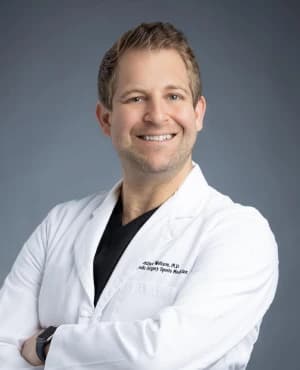
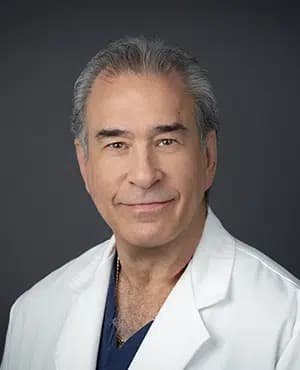
Dr. Wolfson's shoulder practice includes arthroscopy, instability and labral tears, rotator cuff tears and biceps tendon repair. Dr. Chalal and Dr. Press also treat shoulder conditions arthroscopically.
Performed as an outpatient procedure at a hospital or surgery center where our surgeons operate, with evaluation, imaging and physical therapy here in our Boynton Beach office.
Who Is a Candidate?
You may be a candidate if you have shoulder pain, weakness, catching or instability that has not improved with non-surgical care, or an injury such as a dislocation or large tear where surgery gives a better chance of recovery. Our surgeons generally start with physical therapy, activity changes, medication and injections, including ultrasound-guided injections in our office, when those are reasonable.
What to Expect
Your evaluation includes an exam and imaging in our office, such as X-ray, diagnostic ultrasound or MRI. The surgery is usually outpatient, and most people go home the same day. It often takes one to two hours depending on what is repaired. Many patients receive a nerve block in the neck area for pain control along with general anesthesia. You will go home in a sling.
Risks and Side Effects
Shoulder arthroscopy has a low complication rate, but risks include infection, stiffness, nerve or blood vessel injury, blood clots, side effects of anesthesia or the nerve block, and failure of a repair to heal. Your surgeon will explain the risks that apply to your specific procedure.
Recovery
Recovery depends on what was done. After a decompression or other procedure without a repair, you may use a sling for only a few days and return to light activity within a few weeks. After a rotator cuff or labral repair, a sling is usually worn for about four to six weeks, and full recovery often takes four to six months or longer. Timelines vary.
Physical therapy in our office is central to recovery. Our therapists share your chart with your surgeon and progress your exercises as healing allows.
Physical therapy happens in our office, with therapists who share your chart. Learn about on-site physical therapy.
Insurance and Cost
Shoulder arthroscopy is usually covered by Medicare and most commercial PPO plans when medically necessary, and prior authorization is often required. HMO and managed-care plans need a referral from your primary care physician before the visit. Co-pays, co-insurance and deductibles apply. We accept workers' compensation for work-related shoulder injuries and handle required documentation. Call our office to verify your benefits.
When to Talk to a Specialist
Schedule a visit if shoulder pain lasts more than a few weeks, limits your sleep or reaching, or if your shoulder feels unstable. Go to the emergency room or call 911 if your shoulder looks deformed or you cannot move it after an injury, or after surgery you have fever, spreading redness or drainage.